
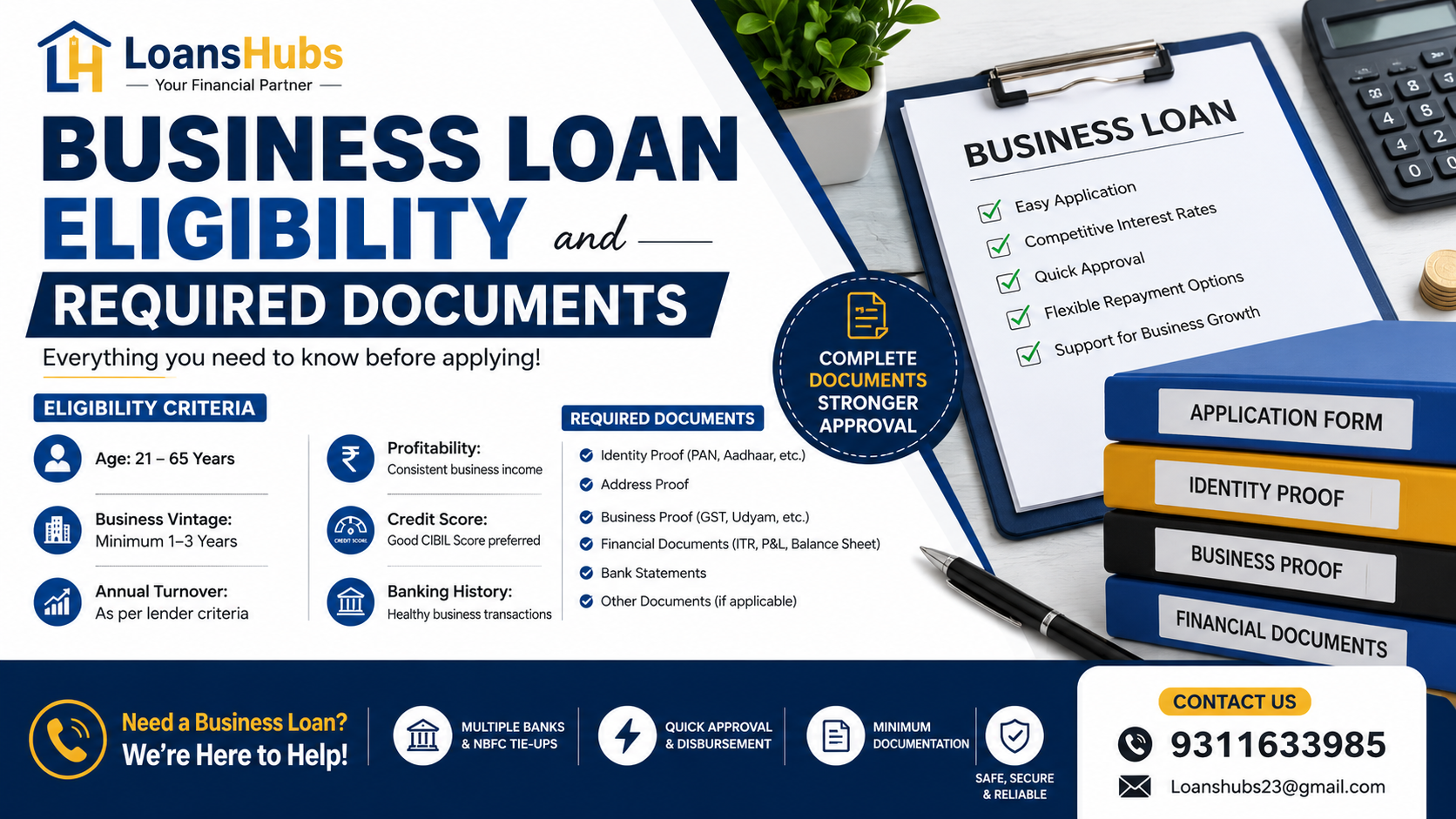
Starting or expanding a business often requires additional funds. Whether you need money to purchase equipment, manage working capital, expand operations, hire employees, or invest in inventory, a business loan can help support your financial goals.
However, before applying for a business loan, it is important to understand the eligibility criteria and documents required. Different banks and NBFCs may have different requirements, but knowing the basic criteria can help you prepare for a smoother loan application process.
What Is a Business Loan?
A business loan is a financial facility designed to help entrepreneurs, self-employed individuals, startups, and companies meet their business-related financial needs. Depending on the lender and loan type, the funds may be used for:
- Business expansion
- Working capital requirements
- Purchasing machinery or equipment
- Buying inventory
- Managing daily business expenses
- Opening a new branch
- Marketing and business development
Business loans may be secured or unsecured, depending on the lender’s policies and the applicant’s financial profile.
Business Loan Eligibility Criteria
The eligibility criteria for a business loan can vary from one lender to another. However, most banks and NBFCs consider the following factors:
1. Age of the Applicant
Generally, applicants should fall within the age range specified by the lender. The minimum and maximum age limits may vary depending on the loan provider and repayment tenure.
2. Type of Business
Business loans may be available for different types of businesses, including:
- Proprietorship firms
- Partnership firms
- Private limited companies
- LLPs
- Self-employed professionals
- Self-employed non-professionals
- MSMEs and small businesses
The business should usually be legally operational and meet the lender’s requirements.
3. Business Vintage
Many lenders prefer businesses that have been operational for a certain period. A longer business history may help demonstrate stability and improve the chances of loan approval.
4. Annual Turnover
Your business turnover is an important factor when applying for a business loan. Lenders may evaluate your annual revenue to understand your repayment capacity and determine the suitable loan amount.
5. Profitability
Apart from turnover, lenders may also review your business profits. Consistent profitability can create a positive impression and may improve your loan eligibility.
6. Credit Score
Your CIBIL score or credit history plays an important role in the business loan approval process. A good credit score may improve your chances of getting better loan terms and interest rates.
If your credit score is low, approval may still be possible in some cases, but the available loan options and terms may differ.
7. Banking History
Lenders may review your business bank statements to understand:
- Monthly cash flow
- Regular transactions
- Business income
- Financial stability
- Existing loan repayments
Maintaining healthy banking transactions can support your business loan application.
Documents Required for a Business Loan
The exact documents required may vary depending on the lender, loan amount, and business type. However, the following documents are commonly requested.
1. Identity Proof
You may be required to provide documents such as:
- PAN Card
- Aadhaar Card
- Passport
- Voter ID
- Driving Licence
2. Address Proof
Commonly accepted address documents may include:
- Aadhaar Card
- Passport
- Utility bills
- Driving Licence
- Other valid address proof
3. Business Proof
Documents proving the existence and registration of your business may include:
- GST Registration Certificate
- Udyam Registration
- Shop and Establishment Certificate
- Trade Licence
- Partnership Deed
- Certificate of Incorporation
- Business registration documents
4. Financial Documents
Financial documents may include:
- Income Tax Returns
- Profit and Loss Statement
- Balance Sheet
- GST Returns
- Audited financial statements, where applicable
5. Bank Statements
Lenders may request recent business or personal bank statements to assess cash flow and repayment capacity.
6. Additional Documents
Depending on your profile, the lender may also request:
- Existing loan statements
- Business ownership documents
- Company documents
- Collateral documents for secured loans
- Photographs
- Loan application form
How Is Business Loan Eligibility Calculated?
Lenders generally evaluate several factors before deciding whether to approve a business loan. These include:
Business Income + Profitability + Credit Profile + Banking History + Business Stability
A strong overall financial profile can improve your chances of approval. The final loan amount and terms will depend on the lender’s internal policies and your eligibility.
Tips to Improve Your Business Loan Eligibility
Here are some useful tips:
Maintain a Good Credit Score
Pay existing EMIs and credit card bills on time. Avoid unnecessary defaults or delays.
Keep Financial Records Updated
Maintain proper records of your income, expenses, GST filings, and tax returns.
Improve Business Banking Transactions
Regular and transparent banking transactions can help demonstrate your business’s financial health.
Avoid Multiple Loan Applications
Applying to too many lenders within a short period may negatively affect your credit profile. Compare your options carefully before applying.
Choose the Right Loan Amount
Apply for an amount that matches your business requirements and repayment capacity.
How LoansHubs Can Help
Finding the right business loan can sometimes be confusing because different banks and NBFCs have different eligibility requirements, interest rates, and documentation processes.
LoansHubs helps you explore suitable loan options based on your business profile and financial requirements. Our team can assist with:
- Understanding business loan eligibility
- Checking required documentation
- Exploring available loan options
- Comparing suitable lenders
- Guidance throughout the loan application process






Leave a Reply